What is Double Jersey Fabric?
As a textile engineer with experience in knitted fabric production, I can confirm that double jersey fabric is a stable, stretchable, and widely used material in the apparel industry. It is known for its thickness, durability, and identical appearance on both sides. In this article, we will explain what is double jersey fabric, its key properties, fabric structure, types, and common uses based on its technical performance and design advantages.
How Double Jersey Fabric is Made
What Makes It ‘Double’?
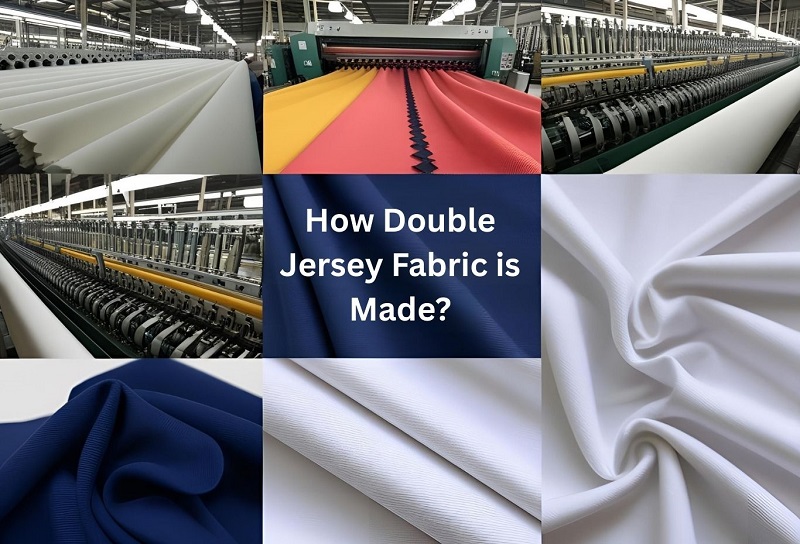
Double jersey fabric is knitted using two sets of needles on a double-bed circular knitting machine. This creates two layers of loops that are interlocked together. As a result, the fabric is thicker and more stable compared to single jersey fabric, which is produced using only one set of needles.
This structure prevents edge curling, a common issue with single jersey fabric. It also improves fabric strength and gives a smooth surface on both sides, making it suitable for garments where both sides may be visible or exposed.
Double Jersey vs Single Jersey
One of the key differences between double and single jersey fabric is thickness. Double jersey is heavier and provides better insulation, while single jersey is lightweight and more breathable.
Double jersey also holds its shape better and resists twisting. Its edges remain flat after cutting, reducing the need for additional stitching during garment construction. This makes it popular for structured garments such as jackets and body-fitting tops.
Types of Double Jersey Fabric
Interlock Jersey
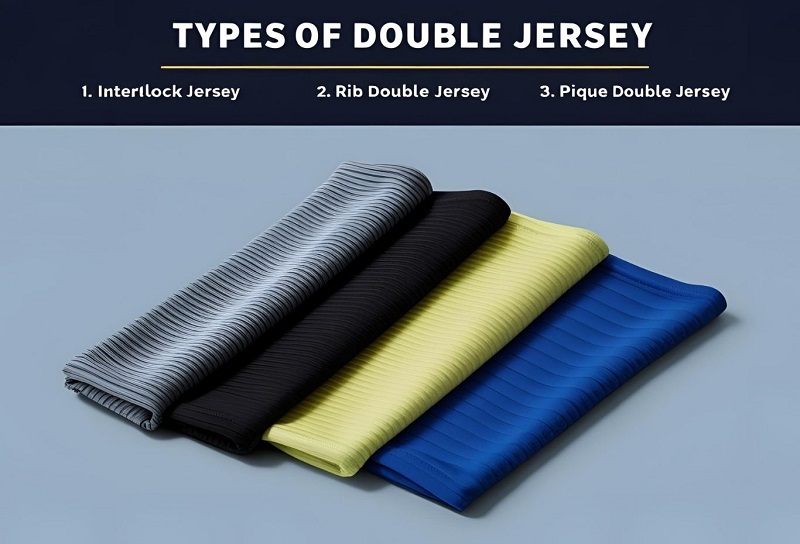
Interlock is the most common type of double jersey fabric. It is tightly knitted with smooth surfaces on both sides. This type has a firm structure and low stretch, which makes it ideal for premium-quality garments and casualwear.
Rib Double Jersey
Rib double jersey fabric has a ridged surface due to alternating knit and purl stitches. It offers excellent elasticity and is commonly used for cuffs, waistbands, and collars where stretch and recovery are needed.
Pique Double Jersey
Pique double jersey fabric features a textured surface with tiny patterns, usually in a honeycomb or waffle design. This type is breathable and often used in polo shirts and sportswear.
These types vary in surface appearance, elasticity, and use, but they all share the common double-layer knit structure.
Properties and Performance
Key Characteristics
Double jersey fabric has multiple useful features:
- Stable: It resists rolling and keeps its shape after stretching.
- Opaque: The dense knit ensures full coverage with no transparency.
- Smooth: Both sides look the same, which is helpful for reversible garments.
- Durable: It can handle repeated use and washing without quick wear.
These double knit fabric properties make it highly dependable for garments requiring shape retention and wear resistance.
Behavior in Use
Double jersey fabric stretches moderately across the width and holds its form when worn. It has better heat retention than single jersey but maintains reasonable airflow depending on yarn count and knit density.
It also drapes more heavily, which is useful for fitted or semi-structured garments. Its wrinkle resistance and weight allow it to be used for formalwear and everyday clothing.
Common Uses of Double Jersey Fabric
Fashion Industry Applications
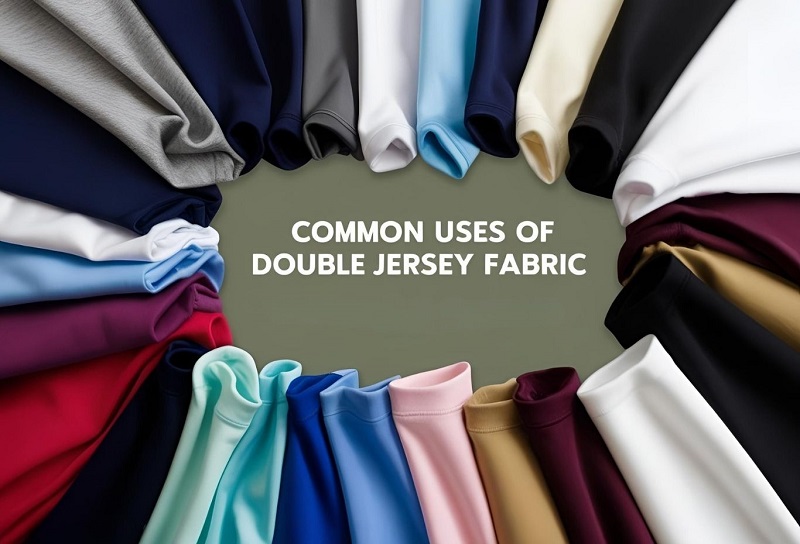
Double jersey fabric is used in fitted dresses, skirts, trousers, jackets, and outerwear. Its firm structure supports clean sewing lines and form-fitting designs. Designers often choose it for midweight blazers, A-line skirts, and sheath dresses.
Sportswear and Athleisure
Due to its comfort and flexibility, double jersey is common in leggings, sports bras, yoga pants, and gym tops. The interlock type is especially used in performance wear for its smooth surface and stretch.
Home Textiles and Accessories
This fabric is also used in cushion covers, mattress protectors, and decorative pillowcases. Its thick knit prevents fraying and gives a premium look and feel to interior items.
How to Identify Double Jersey Fabric
Visual and Touch Clues
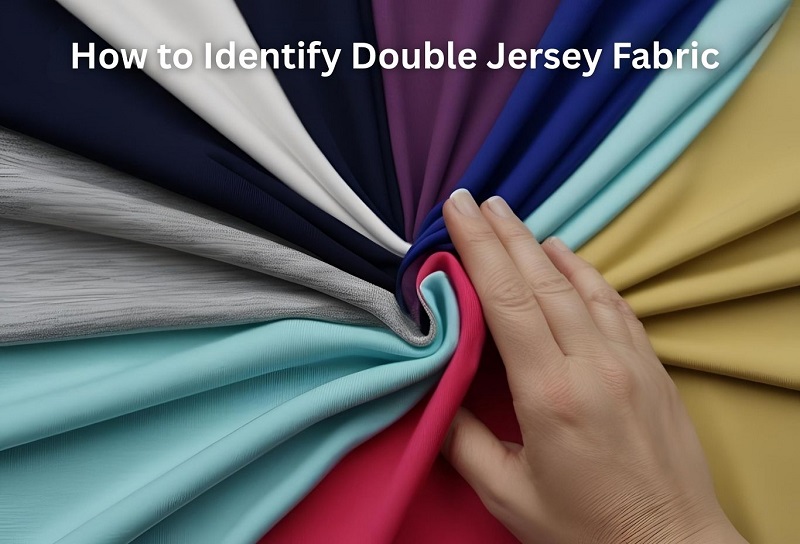
You can identify double jersey by checking both sides of the fabric. If they appear identical, with no clear front or back, it is likely a double jersey. The fabric will also feel thicker and more structured in your hand compared to single jersey.
Testing Tips
Stretch the fabric across its width—double jersey will stretch slightly but return to its original shape. You can also shine a light through it; it should be opaque with no visible holes.
Additionally, when cut, the edges of double jersey fabric remain flat and do not curl, making it easy to sew and hem.
Conclusion: Why Choose Double Jersey Fabric?
To summarize, double jersey fabric offers superior structure, opacity, and durability. It is ideal for garments where both function and form matter. Whether you’re working with sportswear, casualwear, or interior textiles, knowing what is double jersey fabric helps you make better material choices based on performance, design, and manufacturing needs.
By understanding its types and properties, manufacturers and designers can confidently select this fabric for reliable, long-lasting results in both fashion and function.
Manager – Fabric Technical and Sourcing/Product Development/ Sustainable Material Management.
I am a B.Sc .-educated Manager of Fabric Sourcing and Technology with extensive experience in the apparel and fashion industry. Passionate about trend analysis, fabric sourcing, and sustainable textile solutions, I thrive in fast-paced environments that demand innovation, adaptability, and leadership.
As a servant leader, I am committed to honesty, transparency, and continuous process improvement. My expertise spans fabric development, product quality management, and supply chain optimization, ensuring exceptional performance across all facets of sourcing and production.
Core Skills & Expertise
✔ Fabric Sourcing & Development – Specialized in regular and sustainable textiles (BCI, Organic, Recycled).✔ Trend Analysis – In-depth understanding of global fashion and fabric trends.✔ Product Development – Expertise in material innovation and process optimization.✔ Quality Management – Strong focus on process control, ensuring high-quality production.✔ Leadership & Problem-Solving – Solution-oriented approach to team management and decision-making.
Technical Proficiency
🖥 Software & Tools:▪ Microsoft Outlook, Excel, Word▪ PLM (Product Lifecycle Management)
🌱 Sustainable & Ethical Practices:▪ Better Cotton Initiative (BCI)▪ Organic & Recycled Fabric Management
Key Strengths
✅ Solution-Focused Leadership – Driving innovation and efficiency in fabric sourcing.✅ Quick Decision-Maker – Adapting to market shifts and production challenges.✅ Team Player with a Positive Attitude – Ensuring collaboration and productivity.✅ Strong Time Management – Meeting deadlines while maintaining quality.
Professional Achievements
🏆 Li & Fung GEM Award – Recognized for fabric sourcing and supply chain management excellence.🏆 Group CEO GEM Award – Honored for outstanding leadership and process innovation.